The Justification of Faith
Improvement Era, vol. 2, no. 3, January 1899, pp. 194 to 201
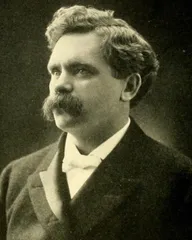
THE JUSTIFICATION OF FAITH. BEING A REVIEW OF W. H. LAMASTER'S ARTICLE "WHAT AGNOSTICISM IS." BY B. H. ROBERTS. Mr. W. H. Lamaster, of Indianapolis, Indiana, will be remembered by our readers as the author of an excellent article which appeared in Vol. I., of the Era under the title "How do we Think;" and also by his article in the December number, Vol. IL, "What Agnosticism Is." The gentleman seems to have been favorably impressed by the liberal spirit of the Era in publishing in Vol. I., the series of articles "Religious Faiths," by ^vriters who were not "Mormons," while the Era is decidedly a Mormon publication; and since we were admitting to our pages the statements of religious faiths and systems other than our own, and that by writers of the respective faiths, he asked if there would be any objection to our publishing an article written by him on "What Agnosticism Is." To which we replied that we could see no reason why we should not publish the views of an agnostic as well as the statements of the various religious faiths; saying at the time, however, that we might "take the liberty to make some remarks by way of comment, tending to show how we who have been reared in the midst of such evidences of the existence of God and the verity of religion can never be influenced by agnosticism." Mr. Lamaster readily consented to this arrange-
THE JUSTIFICA2I0N OF FAITH. 195 ment, and hence the publication of his article and these remarks with reference to it. The article in question states the negative creed—the position of the agnostic—admirably. It is temperate in spirit, and respectfully salutes its antagonist, Faith, with whom, nevertheless, it announces in quiet tones its intention to wage a warfare. Agnosticism, too, as Mr. Lamaster states it, is presented in the bewitching garb of humility. She comes modestly forward saying, in effect, "I don't know; I don't believe you know; or that anybody can know of the existence of God." It is because of these good qualities of the article that we believe it the more dangerous. The usual brutal tirade made by infidels against religion so offends the natural religious sentiment of the human mind that it at once repulses and destroys its own effectiveness because of its ribaldry and unnecessary blasphemy. But when Unbelief comes to us in a temperate spirit, respectfully states its case and modestly sets forth its doubts, it appeals to the Christian on his weakest side, and is likely to infuse doubt in the mind as to the very existence of God. It is for this reason that we think it necessary to point out what we regard as the unreasonableness of the agnostic's position, and especially how there is absolutely no justifiable reason for doubt as to the existence of God so far as Latter-day Saints are concerned. That we may have immediately before us the very heart of Mr. Lamaster's article, we quote his definitions :
- "An agnostic, as contradistinguished from a Greek gnostic—one; who knows—is one who does not know.*
- "It (agnosticism) may be defined as a 'theory of the unknowable which assumes its most definite form in the denial of the possibility of any knowledge of God.' And so the agnostic may be said to be one who does not claim, or profess to know of the existence of a supreme being called God.
- "Christianity, relying upon what it is pleased to call a divine revelation, says there is an infinite God, while agnosticism, having no other guide but reason, says, 'I do not know.' Hence upon the one hand
- Italics are mine. R.
196 .
we find the Christian professing to have a knowledge of the first and final causes of the universe, and particularly of this world and of the things in it; while upon the other is to be found the agnostic confessing his ignorance of all such things. 4. "It is to be conceded that it is among the possibilities of the human mind not only to conceive but also to believe;.and yet it is not to be denied that there are also certain boundary lines within which it may both conceive and believe, and beyond them it cannot go. That being true might we not enquire, how is the human mind—it being finite — either to have a conception or a belief about things infinite? The human mind we know to be limited and consequently, as Sir "William Hamilton says, it 'can know only the limited, and the conditionally limited.' Therefore as concerning things of the infinite (admitting there be an infinite) the human mind can have neither a conception nor a belief of any kind whatever. 5. "With what is called divine revelation agnosticism has nothing whatever to do except it be to attack after the most scientific methods the weakness of its very foundation stone. It must, therefore, as it does, dispute every claim that Christianity makes in favor of the doctrine of the divinity of the Jewish and Christian scriptures. Neither does it stop with these scriptures, but others, whether they be those of the Vedas or the Zend-Avesta, the Koran or the Book of Mormon, it weighs and measures in the scales of science, and one and all of them it pronounces to be the productions of finite men instead of an infinite God." In these paragraphs we have before us the definition of an agnostic; of agnosticism; the position of the Christian is stated so far as his reliance upon divine revelation for his faith in the existence of God is concerned; the ability of the human mind, both to conceive and believe, within certain limits, is conceded. But owing to the finite power of the mind of man, denial is made of his power to have a conception or a belief of any kind whatever concerning the infinite;' and, fmaWy, the statement is made that agnosticism has nothing to do with what is called divine revelation except to attack its very foundation stone, and dispute, as it does, the claim of all alleged scriptures to divine authenticity, and pronounces them the productions of finite man. We understand the only argument in Mr. Lamaster's paper to be : That as the mind of man is finite, he can neither conceive nor believe in the infinite; and therefore, man can neither conceive or
believe in God. In addition to this statement, substantially found in paragraph four, above quoted, it is urged again and again throughout the paper under consideration, as witness the following: "It will not be denied that human beliefs as well as everything else about the human mind are relative. And if that be true, how is finite man to have any conception of, much less any real foundation whatever for, a belief in the existence of an iiifinite God? "Mr. Herbert Spencer says that 'the infinite, the absolute, to be known at all must be classed,' and adds, for it even 'to be positively thought of, it must be thought of as such or such—as of this or that kind;' and then he inquires, 'Can it be like in kind to anything of which we have sensible experience?' and wisely answers, 'Obviously not.' We must, therefore, admit then if there is an infinite God that we as finite beings can know nothing whatever of his existence. "As man is a finite being and limited in knowledge as well as he is in everything else, there will ever be something of which he can know nothing whatever. It must therefore be the infinite being, if any at all, who is able to understand and to know all things. The finite one being cireumscribed and limited, his knowledge must necessarily be also circumscribed and limited, and therefore he is, his desires and ambitions to the contrary notwithstanding to know all things, an agnostic." The reasonable, and, as we think, the effectual answer to all this would be: The Christian concedes that the human mind in its present state is limited in its knowledge, unable by its own powers to conceive or comprehend the infinite. Nor does any theology that we know anything about, Catholic, Protestant, or " Mormon " claim for man the ability to circumscribe God, that is, to comprehend him entirely. Though, speaking for " Mormon " theology, we would not like to say, as some Catholics do, as quoted by Mr. Lamaster, that "a God understood would be no God at all;" for " Mormonism " holds out the hope that the time will come when we shall know God, we mean in the sense of comprehending him; and the mere fact of man coming to such knowledge will not dethrone the Almighty. But to continue our comment on Mr. Lamaster's argum.ent. We concede that the mind of man as to its knowledge in this state of existence is finite; unable clearly to comprehend the infinite. To the question of Zophar, the friend of Job —
1 98 IMPROVEMENT ERA. "Canst thou by searching find out God? Canst thou find out the Almighty unto perfection?" we would be compelled, perhaps, to answer in the negative. With Paul we would be obliged to exclaim —" How unsearchable are his judgments, and his ways past finding out!" But does all this make it impossible for God, the infinite, to reveal the fact of his existence ? Is it impossible for God to reveal to man the fact that Deity is infinite ? And although the mind of man is finite, does it follow that he cannot believe this truth which God reveals ? Is it necessarily a law of logic that man cannot have a rational faith in the existence, power, and infiniteness of any being or force unless it is a being or force that he can fully comprehend? The answer to these questions must be a negative; and if such would be a reasonable answer, then the difficulties suggested in Mr. Lamaster's argument are removed. The matter would stand thus: The finite mind of man cannot by searching find out God — "It must be," as Mr. Lamaster says "the infinite being, if any at all, who is able to understand and know all things." But that infinite Being, understanding all things, among them his own infiniteness, he certainly can, by revelation, make known his existence to man, and can reveal to him the fact that God^that is, that he himself, is infinite. And if such are the limits of man's understanding that the quality of infiniteness is vague and somewhat beyond the power of his mind to grasp, he can at least believe in the fact which God, the Infinite, reveals to him. And a little reflection upon this phase of the subject will convince one that not only is it possible to believe in the existence of facts which the mind does not fully comprehend, but it is quite common for us to do so. The child in this way accepts the statements of the parent through quite a number of the years of its experience. In like manner the pupil accepts the statements of his teacher, and is gradually led along the pathway of knowledge. And why in like manner should not men and women who, after all, are but "children of a larger growth, accept the statements of God's revelations to the effect
that there is ''a God in heaven who is infinite and eternal, from everlasting to everlasting, the same unchangeable God, the framer of heaven and earth and all things that are in them " ? At the last analysis, then, the whole matter resolves itself into the question—has God by revelation made his existence known to man? Has he by revelation made known the fact that he is infinite? The traditions of humanity answer yes; the revelations of God in the Jewish scriptures answer yes. The works and laws of nature, too, bear strong, corroborative testimony to the aflnirmation of both tradition and revelation. The agnostic, however, will set all this aside and say the evidence for the alleged fact is not sufficient to warrant a positive conclusion, and he refuses to accept probability as a sufficient basis for action in the matter of obeying the gospel. This attitude of the agnostic opens a large field for investigation and for discussion, but one, of course, altogether beyond anything contemplated in this article. All we promised to ourselves in this paper was merely to point out the inconsistency of the agnostic's chief argument based upon the inability of the finite to comprehend the infinite; and to show if we could that, to say the least, it is a remarkable conclusion the agnostic arrives at when he says from his premises that "if there is an infinite God . . . we as finite beings can know nothing whatever of his existence! " If we have made the unreasonableness of this conclusion clear, we have well nigh reached the limit of the task proposed to ourselves. We would only say in addition that to the testimony of the universal traditions of mankind for the existence of God; to the testimony of the revelations of the Jewish scriptures for the same great truths; to the corroborative testimony of the works of nature—Mormons add the testimony of the Nephite scriptures, the Book of Mormon, a whole volume of revelation, from which the testimonies of the prophets and seers of sleeping nations speak to the men of this generation; testifying to the existence of God; declaring that he is infinite and eternal and the creator of the heavens and the eaith. Nor do the witnesses which the Mormons have end even here; for to a prophet in this generation, so Mormons believe, God has revealed himself. Joseph Smith, a holy Prophet, the Lord's mouth-piece to the world in this new dispensation of
the gospel—stood in the presence of God and conversed with him as a man may speak with his friend; and he came from the excellence of God's presence with a message to the world, which message is the fullness of the gospel of Jesus Christ, including divine authority to administer the ordinances of the gospel. This last witness for God we have within our reach. If we did not know him personally many of our fathers and friends did; so that we have his pretensions to having received a divine revelation from God within our reach for investigation, for analysis. His life is one with which we may be well acquainted, and we may know whether or not it was consistent with the claims he makes. When it is remembered, then, that in addition to all the testimony that Christianity at large has the Latter-day Saints add the testimony of many of the prophets who lived in America from the most ancient times; and to that the testimony of righteous men who live in their own day, it will be readily observed that they have double the evidence for the existence of God that the socalled Christian world has, and hence, as we believe, a more profound faith in his existence—and hence also less cause for agnosticism or unbelief. Moreover, Joseph Smith held out the encouragement to all men that by compliance with the will of God, they too, as well as himself, might learn from the same divine source the knowledge of God for themselves. Hence the matter of having faith in the existence of God, and somewhat of a knowledge of his character and attributes, is placed upon a better foundation than mere probability by the servants of God; for not only did Joseph Smith place this matter upon a basis where men might know for themselves of the fact of God's existence, but other servants of the Lord, and even the Lord himself, placed it upon this basis. Jesus said: "If ye will do the will of the Father ye shall know of the doctrine, whether I speak of myself or of him that sent me." And to know the truth of the "doctrine" which Jesus taught, would be to know God, for his doctrine taught the existence of God, the Father, and himself as the Son of God. All this, however, will doubtless be set aside by the agnostic. He will still say that the evidence for the facts for which theists contend is still insufficient; and the testimony of Joseph
Smith and other modern prophets will be set aside with the same ease with which the testimonies of the Jewish prophets are set aside. But we refer to it, nevertheless, to show that so far as the Latterday Saints are concerned, they stand in the midst of such a cloud of witnesses that there is no place for unbelief in their hearts; no place for agnosticism, so far as the existence of God and some knowledge of his character and attributes are concerned. And while the testimony may not be sufficient to lead all men to accept the truth, it will nevertheless continue to appeal to very many of both men and women and they will receive it, and by these witnesses their feet will be kept in the way of faith.