The Mormon Point of View in Education
Improvement Era, vol. 2, no. 2, December 1898, pp. 119 to 126
—
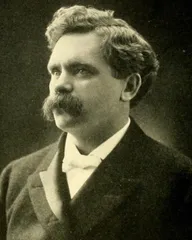
THE MORMON POINT OF VIEW IN EDU- CATION. BY B. H. ROBERTS.
The title of the subject implies that Mormons holds a different point of view as to education than that which is received in the world. This can not be as to education itself. The whole world agrees that education is not reading, writing, or arithmetic —nor even higher mathematics, chemistry and languages added. Everybody concedes that it is the proper training and full development of the whole man — physically, mentally, and spiritually, the latter including moral development or education. If there is anything distinct in the Mormon point of view in education it must be in respect of which of the three great departments of man's education is placed first, or emphasized. And when it is taken into account that the Mormon people are connected with the greatest religious movement of this or any other age a move- — ment which claims for itself nothing less than being the dispensation of the fullness of times — in which all things in Christ will be gathered into one — it what depart- will not be difficult to forecast ment of education Mormonism makes of first importance. Essentially a religious people and charged with the evangelization of the world to their faith, it can not be otherwise than that the words of Solomon will be the key to their point of view in education — "The fear of the Lord is the beginning of knowledge;" and they might not object to the marginal rendering of the passage "The fear of the Lord is the principal part of knowledge." Or in the words of Job, "Behold the fear of the Lord, that is wisdom; and to depart from evil is understanding."
—
Moreover, the conception which Mormonism teaches of man the fact that it regards man's spirit as verily the offspring of Deity, and that that spirit had an existence before it tabernacled in the flesh; that man's spirit is by nature immortal, a spark struck from the blaze of Deity himself —would further incline Mormons to regard the proper spiritual development, or spiritual education of man, as being of first importance. It should further be observed that as it is taught in Mormon theology that the spirit of man is by nature immortal, and had an existence before this present one, so is it taught that this life is a probation— one of the departments in fact of God's great university, through which men are destined to pass in the course of their eternal and progressive existence. In which, though I would not disparage the value of book lore, and what commonly passes in the world for polite education — ^yet are there more important matters than book
learning and a mastery of the curriculum of our academies and universities. Even these more weighty matters, however, are, nevertheless, in the way of education, but relate more especially to the spiritual and moral development of man than to his mental training. In other words, it is of first importance, from the Mormon point of view in education, that the student be taught the truth about himself, his own origin, nature, and destiny; his relationship to the past, to the present, to the future; his relationship to Deity, to his fellow-men and to the universe. And then from this vantage ground of ascertained relationships he is in a position to go forth conquering and to conquer until all things are subdued under his feet — except, as it is said of Christ, Except him which doth put all things under man. And when all things shall be subdued unto man, then shall man also be subject unto God, that God may be all in all.* I pray you think for a moment what effect these doctrines must
have upon a people's views of education: — Man's spirit, the offspring of Deity not in any mystical sense, but actually; as much so as any child on earth is the offspring of his parents! In a pre-existent state, as a spirit, man lived through long ages
I Cor. XV : 27, 28.
THE MORMON POINT OF VIEW IN EDUCATION 121
how long we do not know. But in that pre-existent state he lived and doubtless learned much of the universe. Then there came a time, when, in order for f;iirther development, the spirit must tabernacle in flesh and learn the lessons that death a probation in a world of sorrow, trial, pain, sin, sickness and seeing it in has to teach. That man might learn to love truth, by That he might learn to love vircontrast and in conflict with error. That he might tue, by seeing it in contrast and conflict with vice. learn to appreciate everlasting life, by coming in contact with and
submitting for a moment to death. That he might learn to walk basis of by faith through the midst of doubt; make probability the trust the wisaction, rather than absolute knowledge; and learn to be dom and goodness of God, where the Divine Providence can not followed in absolute certainty, and by the light of reason. And the variety of above all, to demonstrate his fidelity to God in all in this life; that he trying circumstances in which he may be placed weight of might prove himself worthy of that eternal and exceeding that is prepared of God for all those who by patience and glory in this life. well-doing shall fill the measure of their creation also, I pray you, the Mormon doctrine of man's future View the purposes of his presexistence as well as his past existence, and In Mormon doctrine the resurrection of man, that is, the ent life. the spirit, is no myth; resurrection of his body, and its union with shadows and unreality. But it is the future life is to be no land of warmth and full- the to be an existence where we shall live in all
and drink, even as the risen Redeemer ness of life; where we shall eat and make use of all the did- where we shall see, and hear, and feel, faculties and senses of the mind, and experience and enjoy all the stand each in his own identity sentimentsofthe heart; where we shall where we shall build and inhabit; visit -knowing and being known; them in return where we shall travel with our friends and be visited by ;
planetary system to another-from from sphere to sphere-from one you will pardon the apparent error of one universe to another (if something of the beginningless past, and speech) where we shall learn •
something of worlds that have been, something of an eternal future; into shall look upon matter organized and worlds yet to be; where we systems and where we shall see it roU- innumerable suns and planetary ;
shapeless chaos, covered with ingand tumbling in reckless, heaving,
blackness, waiting to be spoken, some day, into order and organized into worlds to be inhabited by the children of the Gods. Man's future existence, according to Mormon doctrine, contemplates all this, and more. It teaches that man in his future life will associate in coun^
men who have long since passed over the pathway cils with exalted
that now may be new to his feet; he will learn by association with them the wisdom of the ages; and acquire and learn to exercise creative powers and the mighty science of government as it exists with the Gods. He will not only learn but in his turn will teach those less advanced than himself; and thus, learning on the one hand from those more experienced and wiser than himself; and on the other teaching those not so far advanced as himself, man stands, according to Mormon doctrine, in the midst of eternal progression —a son of God, mingling with the Gods, and conjoint-heir with them in all that is, whether past or present or that which is to come. ' Look upon man then in this light, as Mormon doctrine reveals him, and what is likely to be the Mormon point of view in education? Unquestionably the very broadest view possible. It will
lift all thoughts of education far above the mere utilitarian notion of education. It will not insist on reading, merely because it may be a prevention against being taken in; on writing, that one may sign checks and bonds and write business letters; on arithmetic, that one may cast up accounts and compute interest; on chemistry, that one may keep a drug store. Education to the Mormon must ever mean more than this severely commercial or utilitarian view of it.
The Mormon point of view in education will regard man's past and man's future, and will arrange its curriculum of instruction with reference to both that past and future. And it will and does — emphasize the spiritual which also includes the moral education — of man. Hence it is that the Church provides academies and colleges where theology, that is to say, the science which teaches the relationship of Deity and man, and the science of right-living, is made a prominent feature in the course of studies.
And yet I would not have my readers think that the Mormon point of view in education emphasizes the spiritual education of man to the neglect of his intellectual and physical education. Nor
THE MORMON POINT OF VIEW 7A EDUCATION. 123
do Mormons regard intellectual and physical education in less esteem than other people do. It is not a case of esteeming intellectual and physical education less, but of esteeming spiritual education more. I think no other people are more impressed with the importance of mental and physical development than are the Latter-day Saints. It was their great prophet Joseph Smith who
was the first to teach that "a man is saved no faster than he gets knowledge, and if he does not get knowledge, he will be brought into captivity by some evil power in the other world, as evil spirits will have more knowledge, and consequently more power, than many men who are on earth."* He was the first to say: "It is impossible for a man to be saved in ignorance."t The first to say, so far at least as I know: "Whatever principles of intelligence we attain unto in this life, it will rise with us in the resurrection; and if a person gains more knowledge and intelligence in this life through his diligence and obedience than another, he will have so much the advantage in the world to come."$ This is said of knowledge in general, and evidently applies, not only to knowledge of facts either moral or intellectual, but also to an application of this knowledge of facts to conduct, that is, to applied knowledge, either of an intellectual or moral character. Looking at the scope of knowledge in the field to which Mormonism invites — nay, commands — its devotees to enter, one must be struck with the comprehensiveness of it; for it seems to me that it covers every possible source from which knowledge can be obtained. You will find warrant for what I say in a revelation given on the 27th of December, 1832. It is true this revelation was given to a number of elders about to engage in the ministry, but they were only commanded to learn that which they were expected to teach to the world and to the Saints, hence indirectly we may say that it is an admonition that applies to all the Saints, as well as to the Elders of the Church. Following is the passage:
- Millennial Star Vol. xix, p. 321.
t Doctrine and Covenants Sec. 131 : 6.
$ Doctrine and Covenants Sec. 130: 18, 19.
"And I give unto you a commandment that you shall teach one another the doctrine of the kingdom; teach ye diligently, and my grace shall attend you, that you may be instructed more perfectly in theory, in principle, in doctrine, in the law of the gospel, in all things that pertain unto the kingdom of God, that are expedient for you to understand; of things both in heaven and in the earth; things which have been, things which are, things which must shortly come to pass; things which are at home, things which are abroad; the wars and the perplexities of the nations, and the judgments which are on the land, and a knowledge also of countries and kingdoms. * * * And as all have not faith, seek ye diligently and teach one another words of wisdom, yea, seek ye out of the best books words of wisdom, seek learning even by study, and also by faith."* I think I may safely challenge any one to point out a broader field of knowledge than is here indicated. It includes all spiritual truth, all scientific truth, all secular knowledge — knowledge of the past, of the present, of the future; of the heavens, and of the earth. A knowledge of all countries, their geography, languages, history, customs, laws and governments —everything in fact that
pertains to them. There is nothing in the heights above or the depths below that is not included in this field of knowledge into which the commandment of God directs his servants to enter. I may claim for it that it includes the whole realm of man's intel-
lectual activities. And the doctrine that whatever principles of intelligence man attains unto in this life will rise with him in the — morning of the resurrection this doctrine that nothing acquired in respect to knowledge is ever lost, must forever form the most powerful incentive to intellectual effort that possibly can be conjured up by the wit of man. So that, referring to the acquirement of knowledge, and intellectual development, Mormonism at once both indicates the broadest field and furnishes the grandest incentive to intellectual effort. In respect of physical development or education, we may also say that Mormonism affords the strongest incentives to its highest attainment. Teaching as it does that the body is to be the
- Doctrine and Covenants Sec. 88: 77-79, 118.
THE MORMON POINT OF VlhW IN EDUCATION. 125
eternal tabernacle of the spirit of man; that the identical body through which the spirit has manifested itself in this life shall be
raised from the dead and again be inhabited by the spirit; teaching, in fact, that "the spirit and the body is the soul of man," and that "the resurrection from the dead is the redemption of the soul," it can not but follow that where such views are held in respect to the resurrection of the body and its eternal reunion with the spirit, the most lively interest will be felt for its development or education, and for its proper preservation. In pursuance of this, God has given a revelation commonly known among us as the Word of Wisdom, that has for its direct object the preservation of the body from those ill effects which follow from the use of tobacco, wine, strong drinks and the excessive use of meats; and gives us the unbounded assurance that if in addition to keeping the commandments of God we also observe this word of counsel or wisdom, then the body will perform to the uttermost the functions assigned to it. Those who fulfill these conditions we are told shall run and not be weary, shall walk and not faint; and further, the destroying angel shall pass by them as in the case of the children of Israel and not slay them. Nor is this all; but the mind reveling with a tabernacle so pre- in the delight of union
served shall, in responsive sympathy, "find wisdom, and great treasures of knowledge — even hidden treasures." That means, as I view it, not the mass of knowledge that others have learned and written in books, or that lives in traditions, but it means access to the greater mass of knowledge not yet made known to man, but waiting to be revealed for the increased blessing of our race. And now at this point I think I am prepared to say what per- one haps at first I could not have said, viz., that while undoubtedly view educaof the distinctive features in the Mormon point of in
tionis to regard the spiritual, including the moral, education of
man as of first importance— emphasizing that—yet another, a includes the first broader distinctive characteristic, and one that one pointed out and perhaps all others, is that in the Mormon point education, intellectual and of view in education all departments in overshadowed by the physical alike, should be sanctified by being education should have spiritual. That is, both mental and physical
.a dash of spiritualism in them. All educational effort should be
undertaken and pursued with reference to their effect upon man^ not as a being whose existence terminates with the grave, but who is to live forever and who may, if he will, become a conjoint heir with Jesus Christ to all the thrones, principalities, powers, and dominions that the Father hath. This, as I view it, is the Mormon point of view in education — has regard not only to the it
preparation of man for the duties and responsibilities of the moment of time he lives in this world, but aims to prepare him for eternal life in the mansions and companionship of the Gods.
PAST AND FUTURE. WRITTEN FOR THE ERA BY JAMES INGEBRETSEN.
In the misty shades of twilight, out upon the ocean beach. Where the murm'ring of the billows mingle not with human speech,- Long I wandered, lost in thinking, on that lonely ocean strand. Seeking solace from the waters sporting on the wavy sand.
There before me was the prospect of the boundless, restless sea; Instigating dreamy fancies of the Past and Is-to-be:
Quoth I: "In the slimy contents of thy water-covered bed. Are there skillful genii can relate the secrets of the dead?
"Grant that one may come and tell me of the wonders that have been- Tell to me the mystic stories of the changes he has seen."
Then arose a shape fantastic, vestured not in earthly dress, Chill'd me with a subtle terror that my nerves could scarce repress. Came a voice, so deep, sepulchral, all my being stood aghast! "Mortal, listen to the promptings of the hoary-headed Past!"
Now a mixed, discordant mutt'ring fell upon my straining ears. Shaping here and there a sentence from the leaves of ancient years..
But no tale could I distinguish, till the voice had reached the end, Where the misty Past and Future with the living Present blend.