Religious Faiths, XI: The Claims, Doctrines and Organization of the Church of Jesus Christ of Latter-day Saints, III
Improvement Era, vol. 1, no. 11, September 1898, pp. 826 to 835
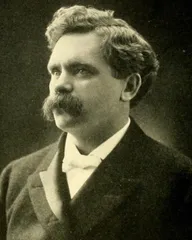
RELIGIOUS FAITHS. XI. THE CLAIMS, DOCTRINES, AND ORGANIZATION OF THE CHURCH OF JESUS CHRIST OF LATTER-DAY SAINTS. BY B. H. ROBERTS. III. THE DOCTRINES OF THE CHURCH IN RESPECT OF MAN AND THE GOSPEL. Next in importance to what The Church teaches about God is what she teaches in regard to man. Next to God man certainly is the most important thing in the universe; for whether we view him from the standpoint of his relationship to other animals, the beauty and majesty of his physical or- ganism, the superiority of his intellectual endowments or the sublimity of his spiritual aspirations, something will be found in each that argues for him a special place in the universe, and will also furnish good grounds for the belief that a special relationship exists between him and Deity. The distinction given to man above all other known crea- tures might well lead the Psalmist, when addressing himself to God, to say: "What is man, that thou art mindful of him? and the son of man, that thou visitest him? for thou hast made him a little lower than the angels, and hast crowned him with glory and honor. Thou madest him to have
RELIGIOUS FAITHS. 82? dominion over the works of thy hands; thou hast put all things under his feet."* The question of the Psalmist, "what is man?" is answered by The Church—"The son of God;"- and this explains why it is that God is mindful of him. The Prophet Joseph Smith taught that the spirits of men before they tabernacled in the flesh had an existence with God in another world; that God is the father of their spirits, Jesus Christ being the first born.f That existence was a tangible one; it involved the realities of life in the heavenly kingdom. Each spirit there was as much an entity as each man is in this present life. Each spirit there had its agency as each man has it here; and was at liberty to take that course he elected to pursue. J "At the first organization in heaven," says the prophet, "we were all present, and saw the Savior chosen and appointed, and the plan of salvation made, and we sanctioned it." Some spirits went so far in the exercise of their agency as to rebel against God. Lucifer, the Son of the Morning, did so, and drew away with him one-third of the hosts of heaven; and they became the devil and his angels.§ This is not only the teaching of Joseph Smith, but also of the Bible. || One thing, however, Joseph Smith taught which, as far as I know, the Bible does not teach, viz, that the spirits of men in their pre-existent estate attained unto a variety of de- grees of intelligence and nobility of character. In the Book of Abraham it is written: "Now the Lord has shone unto me, Abraham, the intelligences that were organized before the world was: and among all these there were many of the noble and great ones; and God saw these souls that they were good, and he stood in the midst of them, and he said, These I will make my rulers, for he stood among those that were spirits, and he said unto me, Abraham thou art one of them, thou wast chosen before thou wast born."** This doctrine throws a wonderful light upon the being and nature of man. Notwithstanding the great influence of *Psalms VIII. fDoc & Cov. Sec. XCIII. tDoc. & Cov. Sec. XCIII: 29-31. §Doc. & Cov. Sec. XXIX: 36-38, also Pearl of Great Price p. 14 (1888 Edition). I See Rev. XII: 7-12. II Peter II: 4- J"de VI. **Pearl of Great Price p. 62.
parentage and environment upon character, in the light of this doctrine, we may understand how it is that in spite of in- different parentage and vicious environment some characters arise that are truly virtuous and great; and that purely by the strength of that intelligence and nobility to which their spirits had attained in the heavenly kingdom before they took bodies upon earth. Their grandeur of soul could not all be suppressed by environment in this life, however inauspicious for their development. As the sun struggles through clouds and mists that at times obscure his brightness, so these spirits, stirred by their innate nobility, breaking through all disadvantages attendant upon ignoble birth and iron fortune, rise to their native heights of true greatness. If a wider survey be taken of mankind, and those ad- vantages and disadvantages under which whole generations, nations and races of men have lived be taken into account; if the fact of their pre-existence be considered in connection with that other fact that the spirits of men before coming to this earth were of unequal intelligence and of every degree of nobility; if it be remembered that in that pre-existent state all spirits had a free agency, and that they there manifested all degrees of fidelity to truth and righteousness, from those who were valiant for the right to those who were utterly un- true to it, and rebelled against God; if it be further re- membered that doubtless in this earth-life these spirits are rewarded for their faithfulness and diligence in that pre- existent state—if all this, I say, be considered, much that has perplexed many noble minds in their effort to reconcile the varied circumstances under which men have lived with the justice and mercy of God, will disappear. The doctrine of the pre-existence of spirits, as also their relation of sonship to Deity, is beyond all doubt a scriptural doctrine; but it seems to have been reserved for the Church of Jesus Christ of Latter-day Saints through her teaching to give clearness and force to it. The fatherhood of God, and its necessary corollary, the brotherhood of man, are trite phrases much in fashion in these modern days; but it is questionable if they have conveyed to the minds of men any definite ideas of the actual relationship of father and son
RELIGIOUS FAITHS. 829 existing between man and Deity. In the mouths of sec- tarians the phrases under discussion have always been em- ployed to express some mystic or indefinite relationship not clearly explained or explainable. It was reserved, I repeat, for the great modern prophet to give these phrases reality. He declared the relationship to be as real as that existing be- tween any father and son on earth; that man's spirit was actually the offspring of Deity—"A spark struck from his own eternal blaze." With him the fatherhood of God and the brotherhood of man were not mere abstractions more or less beautiful, but a reality. The words taught by the Savior of men to his disciples as the proper mode of address to Deity— "Our Father, who art in heaven"—are not meaningless verbiage, but express the true relationship of man and God. This teaching of the church receives support from the language of Paul in his discourse to the Greeks in Mars hill, where he approvingly quoted the words of the Greek poet Aratus—"As certain also of your own poets have said, for we are also his offspring."* "Forasmuch then," he continues, "as we are the offspring of God, we ought not to think that the Godhead is like unto gold, or silver, or stone, graven by art and man's device, "f As to the future of man The Church teaches the literal resurrection from the dead; that is, the reunion after death of the spirit and the body. And from thence-forward she teaches everlasting perpetuation of life in that degree of glory suited to the development attained by each individual— every man being judged according to his works. % That future ♦Following, in part, is the poem: "With Zeus begin we—let no mortal voice Leave Zeus unpraised. Zeus fills the haunts of men— The streets, the marts—Zeus fills the sea, the shores, The harbors—every where we live in Zeus. We are his offspring too. Friendly to man, He gives prognostics; sets men to their toil By need of daily bread; etc. fActsXVII: 28-29. |The Church, however, makes no pronouncement concerning the fate of those who once enlightened, and having tasted the heavenly gift, and been made partakers of the Holy Ghost, the good word of God, and the powers of the world to come—turn altogether away from the truth, and thus crucify to themselves the Son of God afresh, aud put him to an open shame (Heb. 6: 4-6). Concerning such characters—who, by their great sin of high trea-
existence is to be accompanied by every possible means of advancement along the lines of intellectual, moral, and spirit- ual progression, ascending step by step through various de- grees of development, of honor, of glory, of power toward God, until at the last overcoming all evil and embodying all good, they sit down with Jesus in his throne, as he overcame and sat down with his father in his throne.* With these views in respect to man past and future, The Church regards the present existence as merely a probation where man acquires that experience and gains that knowledge which shall prepare him for the future state of development and glory which awaits him, if in this life he fulfills the object of his mission to earth. THE GOSPEL. The atonement of Jesus Christ affects man in two ways: generally and individually. By affecting him generally I mean that the atonement of Jesus Christ redeems all men from the consequences of Adam's transgression, independent of any action on their part; for it is evident that in the transgression of Adam the individual agency of man was not a factor; and therefore justice has no claim in visiting penalties upon the individual for sins committed by Adam; and though death, which was the penalty visited upon Adam and his race in consequence of his transgression, falls upon all men, still free redemption is provided in the atonement of Jesus Christ; and the advantages that accrue to man in this present exist- ence abundantly compensate him for his temporary sub- jection to the power of death. son against God, become Sons of Perdition, the teaching of The Church is that God "saves all the works of his hands, except those Sons of Perdition, who deny the Son after the Father has revealed him; wherefore he saves all except them: they shall go away into everlasting punishment, * * * where their worm dieth not, and the fire is not quenched, which is their tor- ment and the end thereof, neither the place thereof, nor their torment, no man knows, neither was it revealed, neither is, neither will be revealed unto man, except to them who are made partakers thereof. Nevertheless I, the Lord, show it by vision unto many, but straightway shut it up again, where- fore the end, the width, the height, the depth, and misery thereof, they un- derstand not, neither any man except them who are ordained to this con- demnation" (Doc. & Cov. Sec. 76: 43-48). *Rev. 3: 21.
RELIGIOUS FAITHS. 881 The free redemption from the consequences of Adam's transgression through the atonement of Jesus Christ, is clearly sustained by the great authority of Paul when he says: "For since by man came death, by man came also the resurrection of the dead. For as in Adam all die, even so in Christ shall all be made alive."* And again he says in concluding a long argument on the subject, "Therefore as by the offence of one judgment came upon all men to condemnation; even so by the righteousness of one the free gift came upon all men to justification of life."f Hence The Church teaches in her articles of faith: "We believe that all men will be punished for their own sins, and not for Adam's transgression." It follows as a literal sequence of these doctrines that if man himself so lives that he commits no sin, the redemption wrought out by Jesus Christ would be all-sufficient without repentance or any other works on the part of man to insure his complete salvation. Therefore all who die in a state of innocence (this includes surely all who die in infancy) are completely redeemed and saved in the kingdom of God. By the atonement of Jesus Christ affecting men indi- vidually, mentioned above, I mean that The Church teaches that through Messiah's suffering and atonement the way was opened for salvation from the consequences of man's individual sins by absolute obedience to conditions prescribed in the gos- pel of the Lord Jesus Christ. Hence The Church teaches that: "Through the atonement of Christ, all mankind may be saved, by obedience to the laws and ordinances of the gospel." And she teaches that the principles to be accepted and the ordinances to be obeyed are, first, faith in God the Father, in the Lord Jesus Christ, and in the Holy Ghost: second, repentance of sin, which is contrite sorrow for sin, leading to a resolution for the future to forsake it: third, baptism by immersion, which represents the burial of the Lord Jesus Christ and his resurrection to a newness of life, and is accompanied by forgiveness of sin: fourth, the recep- *I. Cor. XV: 21-22. fRom. V: 18.
tion of the Holy Ghost through the laying on of hands, by which to men is imparted the power to walk within the circle of the influence of the Holy Ghost, and to have access to him as the Man of their Counsel, Comforter, Companion and Guide. That the order of these principles and ordinances of the gospel are in strict accord with the scriptures have been so frequently demonstrated in our literature that I do not under- take in this writing to point out that fact, but I wish to call attention to the reasonableness and logical order that exists in this presentation of the gospel. Faith is not regarded by us as the first principle of the gospel because of any arbitrary arrangement, but because of the nature of the thing itself. "He that cometh to God must believe that he is" (that is, that he exists), is the language of Paul; and the truth of his words is self-evident: for if men do not believe in the existence of God it is very evident that they will not consider themselves under obligation to be obe- dient to him and without obedience to God no progress whatsoever can be made towards man's salvation. The strength of this conclusion may be more clearly seen when it is looked at from the negative side, and the questions asked: Why is it that the atheist does not come to God? Why is it that he does not repent of sin in response to the commandment of Jesus Christ? Why is he not baptized for the remission of his sins? In each case the answer is because he does not be- lieve in the existence of God, or that Jesus was the son of God, and hence he does not account himself under obligation to yield obedience to the laws of salvation prescribed by them. Faith, therefore, is the first principle of the gospel from necessity, because of the nature of the thing itself. It is the incentive to all rational action, and by reason of that becomes the foundation of all righteousness, and the first principle of revealed religion. Faith in God once established it is not difficult to convince men that they have lived in violation of the righteous laws of God; that they have trampled under their feet the righteous- ness commanded in the law of heaven; and as a result of this conviction of sin, sorrow takes hold of them and leads them
RELIGIOUS FAITHS. 833 unto repentance, the full fruition of which is a reformation of life. No sooner does sorrow for sin take hold of one than he desires forgiveness of past offenses. Many times in the midst of his groanings over sins he says in his heart: "I would give five, ten, or twenty years of my life, or life itself, if such and such an act could only be obliterated and become as if it never had been; or if it could be forgiven so that there could be reconciliation between me and God, between me and my conscience; that I might again feel that sense of innocence which I knew before I plunged into wrong-doing. These are the natural longings of the human heart when the spirit of repentance takes possession of it, and the Gospel of Jesus Christ in the logical sequence of its teaching rises to meet this condition and tells the sinner that though his sins be as scarlet yet, since he has faith in God and sincere sorrow for sin, by baptism in water, in the name of the Holy Trinity, his sins may be washed white as wool—the past forgiven, and reconciliation with God effected. But after forgiveness of past sins the human weakness still remains, human inclination to sin still drives man on toward error, and his imperfect judgment is not sufficient to guide him aright; his human strength alone is not sufficient to make him equal to the task of living in harmony with the divine law. God knew this would be the condition of man and hence provided in his gospel even a better baptism than that in water, the baptism of the Holy Ghost; by which man's life is brought in touch with the life of God, and some of God's strength imparted to him by reason of which he may hope to overcome the world, the flesh and the Devil. He receives in the companionship of the Holy Ghost, and the privilege of perpetually walking within the circle of his influence, an unction from the Holy One, by which he may know all things, an anointing which, if it abide upon him, will teach him all things.* Under this companionship and its in- fluence man begins the work of character-building, which at the last shall prepare him to dwell with God. It is not an easy task, nor one that can be completed instantaneously. •I. John II: 20-27. 60
It means constant watching, fervent prayer, the practice of self-restraint, the purging out of iniquity and grafting in of virtues; it means learning line upon line, precept upon pre- cept, acquiring of virtue here a little, and there a little, and so on through all the years of man's life—and continues in eter- nity we know not how long; but certainly until all unworthi- ness, under the help of God, is purged out; and all which makes for truth, for righteousness, for holiness, is brought in; and the whole man through the grace of God coupled with his own desires and self-effort is made fit for the heavenly kingdom. This is not an easy plan of salvation, that is, when com- pared with some theologies which define the scheme of man's redemption from his fallen state; but it is the easiest in reality, for the reason that it is the only true gospel, and is the plan devised in heaven for man's salvation, and the one which all men must at the last accept, for there is no other. This is the everlasting gospel, the same through all ages and dispensations. Those who have lived on the earth in periods of time when this gospel was not taught and divine authority was not on earth to administer its sacraments must assent to it in their minds and accept it in their hearts wherever they may be; while the outward ordinances thereof must be per- formed on this earth by those authorized to act for and in be- half of them. This acceptance of the gospel applies to all those who have not died in a state of perfect innocence. Those who have died in their innocence are saved to the uttermost by virtue alone of the atonement of Jesus Christ— on such justice has no claim whatsoever. They rest secure in the arms of God's mercy. This is the teaching of the Holy Church of Jesus Christ —the gospel she is teaching to the living, the sacraments of which she is administering both to the living and for the dead; for having received through her first great prophet, Joseph Smith, the keys of divine authority, and especially those which pertain to the salvation of the dead, she is carry- ing on the work of redemption both in this and in the spirit world; and her especial mission is to unite all dispensations that are passed with this present dispensation of the Fullness
RELIGIOUS FAITHS. 835 of Times, of which she is the exponent. Her mission is to link family with family, and generation with generation, until all the chains are complete which shall bind the whole race of men and women in bonds of love and salvation to our Father and our God, through Jesus Christ our Lord. HEAVEN. O Heaven!—O beautiful and boundless sky! Upon whose breast stars and pale planets lie, Unnumbered and innumerable, ever Mocking with bright'ning eyes man's vain endeavor!— Thou radiant wilderness, through which the moon Moves like a spirit, without voice or tune Accompanied, or song or choral shout, Save what the universal spheres send out For aye,—inaudible, though vast and deep,— Thou world of worlds, within whose arms the sun Awakens; and, when his bright task is done, Like a reposing child, lies down to sleep, Amongst thy golden bowers! O gentle heaven! Art thou indeed the home,—the happy shore, Where creatures wearied of this earth are driven,— Where Hate is not,—where Envy cannot soar, And nought save unimaginable Love, And tenderest Peace (a white and winged dove), And beauty and perennial bloom are seen, And angels breathing in Elysian air Divinest music, and young shapes, more fair Than Houris pacing soft through pathways ever green! Barry Cornwall.