The Claims, Doctrines, and Organization of the Church of Jesus Christ of Latter-day Saints
Improvement Era, vol. 1, no. 10, August 1898, pp. 754 to 769
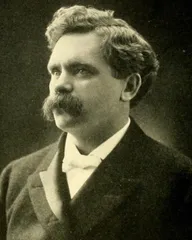
RELIGIOUS FAITHS. X. THE CLAIMS, DOCTRINES, AND ORGANIZATION OF THE CHURCH OF JESUS CHRIST OF LATTER-DAY SAINTS. BY B. H. ROBERTS. IL THE DOCTRINE OF THE CHURCH IN RESPECT OF THE GODHEAD. Joseph Smith said: "It is the first principle of the gospel to know for a certainty the character of God."* It is there- fore proper that early in these papers, which are to set forth the claims and doctrines of The Church, that a statement of the doctrine concerning God should be made. In the articles of our faith, formulated by the Prophet Joseph Smith in 1842, it is declared that We believe in God the Eternal Father, and in his son Jesus Christ, and in the Holy Ghost. While this is the statement of our faith, from it alone would not be learned the whole doctrine of The Church with respect to God. It is necessary to say that The Church teaches that these Three Personages are separate and distinct from each other. That the Father and Son are as distinct from each *Mill. Star, Hist. Joseph Smith, Vol. XXHI; p. 246.
RELIGIOUS FAITHS. 755 Other as any father and son on earth,* and that the Holy Ghost is separate and distinct from the other personages of the Godhead. The Church also teaches that the Father is a personage of tabernacle; that is, that he has a body of flesh and bones as tangible and real as was the resurrected body of Jesus Christ. In other words, that God the Father, like Jesus Christ the Son, is a perfected, exalted man; and the scriptures are true which represent man as having been cre- ated in the image and likeness of God;f as also are those scrip- tures which represent that Jesus Christ is the very image and likeness of God's person. J As the Son is, so is the Father; for the Son is the express image of the Father's person. § There can be no controversy respecting the reality of the form, substance, tangibility—materiality if you will—of the personage of Jesus Christ. His body, his glorious resur- rected body, which he still inhabits in the heavenly kingdom, is part of him—nay, which with the spirit is He. Since beyond all controversy Jesus Christ is a personage of flesh and bones, and while on earth was declared to be the express image of the Father's person, it follows from the scriptures that God the Father, in whom The Church declares her be- lief, must also be a person of tangible form, a personage of flesh and bones, as was and is Jesus Christ. Relative to Jesus Christ, that is relative to his personality, and materiality, there can be no question. He was born of woman, reared from infancy to childhood as other children of his time and country. He passed from childhood to youth and manhood just as others did; and in all respects of his life, in his nature and fortunes so much resembled other men about him, that when he began to proclaim himself the Son of God, he offended those who heard him and especially those who knew him best, and they said: "Is not this Jesus, the son of Joseph, whose father and mother we know? How is it then that he saith, I came down from heaven?"|| And when he did mighty works and taught wise counsels, they still murmured and said: *Doc & Cov. Sec. CXXX. fGen. I; 26, 27; Gen. V: i; and IX: 6; I Cor. XI: 7; James III: 9. :t:Col. I: 15; II Cor. IV: 4; Heb. I: 1-3. SHeb. I: 3- IJohn VI: 42.
756 IMPROVEMENT ERA. "Is not this the carpenter, the son of Mary, the brother of James, and Joses, and of Juda, and Simon? And are not his sisters here with us? And they were offended at him."* This much to prove that in outward form and semblance Jesus was like men. He was subject as they were to hunger, cold and fatigue. He was pre-eminently the man of sorrows and acquainted with grief. The same instruments wounded him as wounded men; the same blasts chilled him, the same fire warmed, the same emotions and affections swayed him, and the same evils, injustice, hypocrisy and in- gratitude, which move righteous men with vexation, also angered him. In short, everything in his nature and his life proved him to be a man as well as a God. And after his resurrection he still retained the form and semblance of a man. Nay, better say he continued to be a man as well as a God. He still retained his body; that body born of woman, which grew by what it fed upon from in- fancy to manhood. The identical body which Pilate scourged, and the Roman soldiers whipped through the streets of Jeru- salem, and through the quivering hands and feet of which on Golgotha's dreary heights the cruel nails were driven. That body in a glorious resurrection came forth, and for forty days he ministered to his disciples in Palestine. The holy women who had ministered to him in the days of his afflictions, after his resurrection, placed their hands upon his feet and worshipped him."}" To the fearful company of his disciples to whom he appeared after his resurrection, he said: "Why are ye troubled? and why do thoughts arise in your hearts? Be- hold my hands and my feet, that it is I myself: handle me, and see; for a spirit hath not flesh and bones as ye see me have. And when he had thus spoken, he showed them his hands and his feet. And while they yet believed not for joy, and wondered, he said unto them, have ye here any meat? And they gave him a piece of broiled fish, and of an honey comb. And he took it and did eat before them. "| And all this, remember, after his resurrection. Finally with that body *Mark VI: 3. fMatt. XXVIII: 9. iLuke XXIV: 38-43.
RELIGIOUS FAITHS. 757 from the midst of his disciples he was gloriously taken up into heaven, while two heavenly messengers stood by who assured the multitude that stood gazing at the receding form of the beloved Messiah—God, the Son—that "this same Jesus, which is taken up from you into heaven, shall so come in like manner as ye have seen him go into heaven."* Arud later, in a glorious vision, while filled with the Holy Ghost, the first Christian martyr, Stephen, looking steadfastly up into heaven, saw there the glory of God, and Jesus standing on the right hand of God. And said, I see the heavens opened, and the Son of Man standing on the right hand of God."f And so God the Son, continues in heaven, and will forever so continue, as he was on earth after his resurrec- tion—a personage of flesh and bones, immortal and all- glorious; still possessed of the brightness of God's glory, and still the express image of his Father's person, at whose right hand he sits enthroned in power. | It ought to be said further of Jesus Christ that The Church teaches that his spirit existed with God, as did the spirits of all men, before he tabernacled in the flesh; that in that estate he stood with God the Father, and under the direction of the *ActsI: lo, II. fActs Vn:55. 56. iXhe distinct personality, individuality, materiality, of the exalted man Jesus Christ, who is also God, the Son, is so clearly established by the scriptures quoted in the above remarks, and by many other scriptures not considered for want of space, that it seems to me there can be no reason- able ground upon which to question his possession of these physical characteristics, and yet he is God. And if Jesus Christ, pos- sessed of a resurrected and immortal body is God—that is, God, the Son, or the Son of God—then I cannot conceive, and never have been able to understand why it is to be accounted blasphemy to think of God the Father as being a similar personage. A personage like man in form, possessed of an immortal body of flesh and bones, as Jesus is; in a word, in thinking of him as an exalted man, as we must needs think of Jesus Christ. And yet, there is not today a doctrine held by The Church more de- nounced than this same common-sense ana scriptural doctrine. It is held up as blasphemy, as something rendering those who entertain it unchristian (See Presbyterians' " 7'en Reasons why Christians cannot fellowship with Mormons"). And yet two things from the scriptures are clear, first, that as the Son is, so is the Father; (indeed, so far is this considered to be true that Christians who accept the creed of Athanasius often repeat—"Such as the Father is, such is the Son," Book of Common Prayer, p. 49); second, that Jesus Christ is a personage of flesh and bones and forever will remain so—an exalted man. These two things being true, it follows that the Father is a personage of flesh and bones—an exalted man.
758 IMPROVEMENT ERA Father was the creator of this earth and all that is in it, and of many other worlds also. "In the beginning was the Word," says John the apostle, '-'and the Word was with God, and the Word was God. The same was in the beginning with God. All things were made by him; and without him TiVcs not anything made that was made. In him was life; aad the light was the life of men. * * * * ^^^ the Word was madeflesh, and dwelt among us, and we beheld his glory, the glory as of the only begotten of the Father, full of grace and truth."* Paul, in speaking of Christ, says: "Who is the image of the invisible God, the first born of every creature. For by him were all things created, that are in heaven, and that are in earth, visible and invisible, whether they be thrones, or dominions, or principalities or powers: all things were created by him, and for him. He is before all things and by him all things subsist. "f And again: "God * * * * hath in these last days spoken unto us by his Son, whom he hath appointed heir of all things, by whom also he [the Father] made the worlds. ^'\ So also in some of the revelations given through Joseph Smith: "Behold, I am Jesus Christ, the Son of the living God, who created the heavens and the earth. "§ "And now, after the many testimonies which have been given of him [Jesus Christ], this is the testimony last of all which we give of him, that he lives; for we saw him, even on the right hand of God, and we heard the voice bearing re- cord that he is the only begotten of the Father—that by him and through him, and of him the worlds are and were created, and the inhabitants thereof are begotten sons and daughters unto God. "II "Therefore in the beginning the Word was, for he was the Word, even the messenger of salvation, the light and the Redeemer of the world; the Spirit of truth, who came into the world, because the worlds were made by him: men were *John I: 1-14. tCol. I: 15-17. tHeb. I: i, 2. §Doc. & Gov. Sec. XIV: 9. II Doc. & Gov. Sec. LXXVI: 22-24.
RELIGIOUS FAITHS. 759 made by him: all things were made by him, and through him, and of him."* One of the Nephite prophets, before Jesus dwelt in the flesh with men, said prophetically of him: "And he shall be called Jesus Christ, the Son of God, the Father of heaven and earth, the Creator of all things from the beginning; and his mother's name shall be called Mary."t Jesus Christ, then, under the direction of the Father, is the creator of our earth and all things pertaining to it and also of many worlds and this fact may account for some ex- pressions of scripture otherwise difficult to comprehend: namely, that since Jesus was the Creator, or as the Book of Mormon expresses it, "the Father of heaven and earth, the creator of all things"—so far as a "creator" may be considered a father, then Jesus was in that sense the "Father" of heaven and earth; and therefore it would not be improper to speak of him, or for him to speak of himself as the "father" (i.e. creator), or as being both the father and the son though he was and is but God the Son in the Holy Trinity. But chiefly he is spoken of in our scriptures as both the Father and the Son because all the power, authority and glory of the Father had been given unto him—"For it pleased the Father that in him should all fulness dwell. "| "For in him dwelleth all the fulness of the Godhead bodily. "§ All the power was given to him in heaven and in earth;|| and therefore he was possessed of all the authority of the Godhead, and in this respect was he the Father as well as the Son, in that he held the Father's power and authority, to do what he did; and being the ex- press image of his Father's person, truly whosoever had seen the Son had seen also the Father.** *Doc. & Cov. Sec. XCIII. fBook of Mosiah, III: 8. President Brigham Young also said, in a discourse delivered August 8th, 1852: "Christ is the author of this gospel, of this earth, of men and women, of all the posterity of Adam and Eve, and of every living creature that lives upon the face of the earth, that flies in the heavens, that swims in the waters, or dwells in the field. Christ is the author of salvation to all this creation, to all things pertaining to this terrestial globe we occupy." JCol. I: 19. SCol. II: 9. |Matt. XXVIII: 18. John III: 34, 35- **John XIV: 8-1 1.
760 IMPROVEMENT ERA. The Holy Ghost is also a personage, but according to the teachings of The Church differs from God the Father and God the Son in that he has not a body of flesh and bones as they have, but is a personage of spirit.* The Church, as we shall see later, accepts the Bible as an authority on doctrine, and the Bible clearly teaches the personality of the Holy Ghost, In the language of the scripture the Holy Ghost is He rather than //. "I will pray the Father," said Jesus, "and he will give you another comforter, * * * * even the spirit of truth whom the world cannot receive, be- cause it seeth him not, neither knoweth him; but ye know him, iox he dwelleth with you and shall be in you."t But the comforter, which is the Holy Ghost, * "* he shall teach you all things. "| * * He shall testify of me,"§ * * He will guide you into all truth; for he shall not speak of himself: but whatsoever he shall hear that shall he speak, and he will show you things to come. He shall glorify me; for he shall receive of mine and shall shew it unto you. "II The Holy Ghost is the especial Witness for the Father and the Son. He guides into all truth, he teaches all things. Those who accept the gospel have power given to them to walk within the circle of his influence. He is accessible to them as companion, guide and comforter. He, by the law of his being, directly influences their spirits and brings them into the ways of God. He reproves them for sin, strengthens their wills when weak, and is the one helping power that makes it possible for man to attain salvation through Jesus Christ our Lord. The influence radiating from the personal presence of the Holy Ghost fills all the realms of God, and to those brought into harmonious relations with God through the gospel this influence becomes the very presence of God to them and in them; for by it are they made one with God as the Son is one with the Father. *Doc. & Gov Sec. CXXX. tjohn XIV: i6, 17. ijohn XIV: 26. Sjohn XV: 26. IJohn XVI: 13, 14.
RELIGIOUS FAITHS. 761 It was evidently for this that Jesus prayed when he said, referring to his disciples: "Holy Father, keep through thine own name those whom thou hast given me, that they may be one, AS we are." * * * * Neither pray I for these alone, but for them also which shall believe on me through their word. That they all may be one; AS thou, Father, art in me, and I in thee, that they also may be one in us."* Clearly it was not the uniting of the persons of his dis- ciples into one person or body that Jesus here prayed for; but he would have them of one mind and one spirit, ai-he and the Father are one So also he had no wish that the person of one of his disciples should be merged into that of another, and so on until they all become one personage—but "ax thou, Father, art in me, and I in thee." That is, while re- maining distinct as persons, Messiah would have the mind or spirit of God in his disciples as it was in him, and as his was in the Father, that God might be all in all; the Father to be honored as the head and worshipped in the name of the Son; and the Holy Ghost to be revered as the Witness and Messen- ger of both the Father and the Son—the bond of union be- tween God and men and between men and men—in one word to be God in man. These Three Personages then, according to the teachings of The Church, constitute the Godhead, the supreme govern- ing council of the heavens and the earth. The Three are One. Not one in person, but in their perfections and attributes. They are perfectly united in mind and action and judgment. They constitute one presidency, one governing power—the Godhead, to whom alone man owes allegiance to be expressed in divine worship. The following illustration of the oneness of the Godhead though made up of three distinct persons, is too valuable to be omitted: "The Godhead may be illustrated by a council, con- sisting of three men—all possessing equal wisdom, knowl- edge and truth, together with equal qualifications in every *JohnXVII: ii, 20, 21.
762 IMPROVEMENT ERA. respect. Each person would be a separate distinct person or substance from the other two, and yet the three would form but one council. Each alone possesses, by supposition, the same wisdom and truth that the three united or the one coun- cil possesses. The union of the three men in one council would not increase the knowledge or wisdom of either. Each man would be one part of the council when reference is made to his person; but the wisdom and truth of each man would be the whole wisdom and truth of the council, and not a part. If it were possible to divide truth, and other quali- ties of a similar nature into fractions, so that the Father should have the third part of truth, the third part of wisdom, the third part of knowledge, the third part of love, while the Son and the Holy Spirit possessed the other two-thirds of these qualities or affections, then neither of these persons could make 'one God,' 'but only a part of a God.' But be- cause the divisability of wisdom, truth, or love is impossi- ble, the whole of these qualities dwell in the Father—the whole dwells in the Son—the whole is possessed by the Holy Spirit. The Holy Spirit is one part oi the Godhead in essence; but the whole of God in wisdom, truth, and other similar qualities. If a truth could become three truths, distinct from each other, by dwelling in three substances, then there would be three Gods instead of one. But as it is, the trinity is three in essence, but one in truth and other similar principles. The oneness of the Godhead, as described in the scriptures, never was intended to apply to the essence, but only to the perfec- tions and other attributes."* This teaching respecting the Godhead offends against what is regarded as orthodox Christian doctrine on the same subject in two particulars: First, it affirms that God the Father, as well as God the Son, is a corporeal personage; that he has a body of flesh and bones; that he has form, dimensions, organs and parts as to his body; and that he has affections, sentiments and passions as to his mind. All this is in marked contrast to the doctrine gen- erally expressed in orthodox creeds as follows: *Orson Pratt.
RELIGIOUS FAITHS 763 There is but one living and true God, everlasting, -without body, farts or fassions; oi infinite power, wisdom and goodness. The Maker and Preserver of all things both visible and invisible. And in unity of this God- head there be three persons, of one substance, power and eternity; the Father, the Son and the Holy Ghost.* The same doctrine is more elaborately stated in what is known as the creed of Saint Athanasius: Whosoever will be saved: before all things it is necessary that he hold the Catholic faith. Which faith, except everyone do keep whole and undefiled: without doubt he shall perish everlastingly. And the Catholic faith is this: that "we worship one God in Trinity, and Trinity in Unity; neither confounding the persons; nor dividing the substance. For there is one person of the Father, another of the Son, and another of the Holy Ghost But the God- head of the Father, Son and Holy Ghost is all one: the glory equal, the majesty coeternal. Such as the Father is, such is the Son and such is the Holy Ghost. The Father uncreate, the Son uncreate, and the Holy Ghost uncreate. The Father incomprehensible, the Son incomprehensible, and the Holy Ghost incomprehensible. The Father eternal, the Son eternal, and the Holy Ghost eternal, and yet these are not three eternals; but one eter- nal. As also there are not three incomprehensibles, nor three uncreated; but one uncreated and one incomprehensible. So likewise the Father is Almighty, the Son Almighty, and the Holy Ghost Almighty, and yet there are not three Almighties, but one Almighty. So the Father is God, the Son is God, and the Holy Ghost is God, and yet they are not three Gods but one God. We have not space in this writing nor is it necessary to contrast this, as I think, absurd, contradictory and unscrip- tural conception of God with the teaching of The Church on the same subject, set forth in this paper. That is a task I shall leave to each reader, confident that with the two state- ments of the doctrine before him, the teachings of The Church will not suffer when tested by reason and the scriptures. Second, the teaching of The Church offends against alleged orthodox doctrine in that when it affirms the absolute dis- tinctness of the personages of the Godhead, it affirms that there is a plurality of Gods—three. And it is said that when we affirm that there are three distinct personages in that Godhead and that their oneness consists only in a unity of mind, purpose, knowledge, wisdom, goodness, and glory, Church of England Prayer Book—Articles of Faith.
764 IMPROVEMENT ERA. etc., that we are guilty of blasphemy. How that follows is difficult to comprehend. Why reverence for the Godhead can not be just as profound under the conception that that Godhead consists of three distinct personages perfectly united in all things, possessed of the same attributes, power and glory, and constituting one governing council, as under the conception set forth in the remarkable creed of Saint Athana- sius, has never yet been sasisfactorily explained. And, in fact, the idea that it cannot be is but the biased judgment of sectarians condemning a belief somewhat at variance with the one they profess. But the teachings of The Church on this subject are even more far-reaching than the above statement indicates. The doctrine of a plurality of Gods opens up almost untraversed fields of thought—bold conceptions which, while revolution- ary to what is regarded as orthodox theology, are neverthe- less true and must sooner or later win their way in the earth. And as for their being in harmony with the revealed word of God, let that not be doubted. As I have remarked elsewhere,* what means that ex- pression in Genesis, where, speaking of the creation of man, God is represented as saying: "Let us make man in our im- age, after our likeness?"! Is it not a fair inference that he addressed himself to other Gods who were present? Passing by many other expressions in the Old Testament that convey the idea of the existence of a plurality of Gods, I take up the preface to the gospel according to St John: "In the beginning was the Word, and the Word was with God, and the Word was God. The same was in the beginning with God." It is generally conceded that the "Word" here spoken of as being with God in the beginning is Jesus Christ. If any doubt existed that Jesus is referred to, it would be dispelled by the fourteenth verse of the same chapter, in which the preface occurs: "And the Word was made flesh, and dwelt among us (and we beheld his glory, the glory as of the only begotten of the Father) full of grace and truth." *New Witness for God, Ch. XXX. fGen. I: 6.
RELIGIOUS FAITHS. 765 Here, then, at least is an account of two Gods—one of which dwelt with the other in the beginning, and one—the Word—afterwards came to the earth, was made flesh and dwelt on earth with men, and was known as Jesus of Nazareth. When Jesus—the Word—was baptized in Jordan, as he came out of the water, the heavens opened, the Spirit of God descended upon him, and lo, a voice from heaven said: "This is my beloved Son in whom I am well pleased."* Here there appears on the scene three Gods—the "Word," and doubtless the God with whom the "Word" had dwelt in the beginning. In other words here was God the Father, and God the Son, both present; the Holy Ghost was also present, and yet distinct from both the Son and the Father—three Gods, so far as their persons are concerned.f In the greeting to the seven churches of Asia, which John embodies in his preface to the Apocalypse, he says: "Grace be unto you * * * from Jesus Christ, who is the faithful witness. * * * Unto him that loved us, and washed us from our sins in his own blood, and hath made us kings and priests unto God and his Father; to him be glory and dominion for ever and ever. Amen."| I call special attention to the words written above in italics—''unto God and his Father," which can only mean God and the Father of God, which certainly conveys the idea of a plural- ity of Gods.§ *Matt. Ill: i6, 17. fThe Prophet Joseph, referring to this matter, says: "I wish to declare I have always, and in all congregations when I have preached on the subject of the Deity, it has been the plurality of Gods. It has been preached by the elders for fifteen years. I have always declared God to be a distinct personage, Jesus Christ a separate and distinct personage from God the Father, and that the Holy Ghost was a distinct personage and a spirit; and these three constitute three distinct personages and three Gods. If this is in accordance with the New Testament, lo, and behold! We have three Gods anyhow, and they are plural; and who can contradict it?" Millennial Star, vol. XXIV: p 108. IRev. I: 1-6. SCommenting on this text the prophet said: If Jesus Christ was the Son of God, and John discovered that God, the Father of Jesus Christ, had a Father, you may suppose that he had a Father also. Where was there ever a son without a father? And where was there ever a father without first being a son? Whenever did a tree or anything spring into existence without a progenitor? And everything comes in this way. Paul says that that which is earthly is in the likeness of that which is heavenly. Hence,
766 IMPROVEMENT ERA. I have not space here to consider such expressions with which the scriptures abound—as "The Lord God is God of Gods and Lord of Lords;"* "The Lord, God of Gods, the Lord, God of Gods, he knoweth, and Israel he shall know if it be in rebellion," etc.f "O give thanks to the God of Gods * * * o give thanks to the Lord of Lords."| "And shall speak marvelous things against the God of Gods."§ "The Lamb shall overcome them; for he is Lord of Lords and king of kings. "|| Such expressions I know would be worthless as evidence in the matter under discussion if found in the mouths of heathen kings and prophets who are sometimes represented as speaking in the Bible; but the expressions here carefully selected are found on the lips of Moses, of the children of Israel, David, Daniel, and the Apostle John; and coming as they do from recognized and divinely authorized servants of God, they are important as not only upholding but proclaim- ing the idea of a plurality of Gods. "I and my Father are one," said Jesus on one occasion. "Then the Jews took up stones again to stone him." Jesus—"Many good works have I showed you from my Father, for which of those works do ye stone me?" The Jews—"For a good work we stone thee not; but for blasphemy; and because that thou, being a man, makest thy- self God." Jesus—"Is it not written in your law, I said ye are Gods? If he [that is, God who gave the law] called them Gods unto whom the word of God came, and the scripture cannot be broken, say ye of him, whom the Father hath sanctified and sent into the world, thou blasphemest; because I said I am the Son of God? If I do not the works of my Father believe me not."** if Jesus had a Father, can we not believe that he had a Father also? I de- spise the idea of being scared to death at such a doctrine, for the Bible is full of it." Millennial Star, Vol. XXIV: p. 109. *Deut. X: 17 tjosh. XXII: 22. iPsalms CXXXVI: 2, 3. §Dan. XI: 36. II Rev. XVII: 14. **John X: 30-37.
RELIGIOUS FAITHS. 767 Let it be observed that in the above conversation when Jesus was accused of making himself God, he did not deny the charge; but on the contrary, called their attention to the fact that God in the law he had given to Israel had said to some of them—"ye are Gods." And further, Jesus argued, if those unto whom the word of God came were called Gods in the Jewish law, and the scripture wherein the fact was de- clared could not be broken, that is, the truth denied or gainsaid—why should the Jews complain when he, that is Christ, who had been especially sanctified by God the Father, called himself the Son of God? On another occasion Jesus said to the Pharisees: "What think ye of Christ? whose son is he?" Pharisees—"The son of David." Jesus—"How then doth David in spirit call him Lord, saying—The Lord said unto my Lord, sit thou on my right hand, till I make thy foes thy footstool? If David then call him Lord, how is he his son?"* The Pharisees could make him no answer, nor dared they question him further. All that concerns me in the pas- sage is to note that one God is represented as saying to an- other—"Sit thou upon my right hand until I make thy foes thy footstool—and that clearly proves the existence of more than one God. No higher authority than this can be cited in support of any theological doctrine. These conversations of Jesus with the Jews so completely prove that Jesus himself taught the ex- istence of a plurality of Gods, that there can be no question- ing it. I shall be told, however, that Paul expressly says: "There is none other God but one." That statement taken alone would seem conclusive; but considered in connection with its context, which explains it, it will be found in harmony with all the passages here produced to prove a plurality of Gods. The single statement quoted above is immediately followed by these words: "For though there be that are called Gods, whether in heaven or in earth (as there be Gods many and »Matt. XXII: 41, 45. Also Psalms CX. i.
768 IMPROVEMENT ERA. Lords many); but to us there is but one God, the Father, of whom are all things, and we in him, and one Lord, Jesus Christ, by whom are all things, and we by him."* From this it appears that there be many that are called Gods both in heaven and in earth. Had the reference to many Gods and many Lords been confined to these that are called such in the earth, the force of the passage might have been broken somewhat by the probability that reference was made to the false gods of the heathens; but when we are told that "there be that are called Gods whether in heaven or in earth," by which I understand that there are those that are called Gods both in heaven and in earth, Christians will not claim that the many Gods spoken of as being in heaven are false Gods. But still the apostle teaches that to us there is but one God, the Father; and one Lord, Jesus Christ. So also taught the Prophet Joseph.f He taught that there was but one God to whom it was proper for us to pay divine honors in worship—God, the Father—the Father of Jesus Christ, and of whom the Holy Ghost is the witness. But this does not strike out of existence the many other Gods and Lords that live and have dominion in other worlds, any more than it strikes out of existence other kings and emperors of this world, when we say that to the British subject there is but one sovereign to whom he owes allegiance. If the phrase "Grand Presidency" be substituted for Godhead, and "President" for God, we shall have a nomen- clature that will better convey correct ideas to the mind re- specting the Gods than that now in common use. How, then, would the teaching of the Prophet Joseph respecting the Gods rise to meet the conceptions of the extent and gran- deur of the universe, as now known to our astronomers! An *I Cor. VIII: 4. 6. fOn the passage under consideration the prophet remarked: "Paul says there are Gods many and Lords many—I want to set it forth in a plain and simple manner—but to us there is but one God—that is fertaining to us; and he is in all and through all . But if Joseph Smith says there are Gods many and Lords many, they cry, Away with him! Crucify him! Crucify him!" * * * Paul, if Joseph Smith is a blasphemer, you are. I say there are Gods many, and Lords many, but to us only one; and we are to be in sub- jection to that one." Millenial Star, vol. XXIV, p. io8.
RELIGIOUS FAITHS. 769 infinitude of worlds and systems of worlds rising one above the other in ever-increasing splendor in limitless space and eternal duration, would have, as a concomitant, an endless line of exalted men, to preside over and within them as priests, kings, patriarchs, Gods! Nor is there confusion, disorder, or strife in their vast dominions; for they all govern upon the same righteous principle that characterizes the gov- ernment of God the Father. The Gods have attained unto the excellence that Jesus prayed for in behalf of his apostles and those who might believe on their word, as already noted in this paper; and as they all govern their worlds and systems of worlds by the same spirit and upon the same principles, there is a unity in their government that makes it one, even as they are one. Let worlds and systems of worlds, and galaxies of systems extend as they may throughout limit- less space, yet there exists a government which while characterized by unity is still co-extensive with the Gods and the universe. For this unified and universal government of the Gods, and for each grand Presidency thereof, recognizing each in its sphere as part of the grand, unified whole, and the Holy Trinity known to us as the Father, the Son and the Holy Ghost as the Godhead, and the only Godhead pertaining to us, to whom we pay divine homage in holy worship—who can withhold reverence and obedience, which is ever the best worship? What feeling is there in the heart of man that is not chastened and subdued to sweetest harmony with the great spirit of the universe, in contemplation of a theme so grand? Who is not inspired with a profound sense of obli- gation, dependence and awe as the grandeur of this theme fills his soul? Who shall say that these conceptions con- cerning the Gods and their government are not as conducive to piety, reverential awe, proper worship, and right living, as the conceptions of the monotheists? But I will not take leave of this theme with a question. On the contrary I affirm that the doctrine of the Gods and their government as taught by the Church of Jesus Christ of Latter-day Saints, since it involves no division of allegiance; no confusion of worship; no detraction of the Godhead; and is withal most in harmony with the scriptures; most in keeping with the canons of right-reason; and the doctrine which best rises to meet the known facts of the extent and grandeur of the universe, as revealed by modern research and discovery the doctrine of The Church, I affirm, when rightly compre- hended, is more conducive to piety, to true worship, to right living, than the doctrine of monotheists as stated in the creeds of so-called Christendom. 56